


FORMA COLLECTION
Chevron Engineered European Oak Flooring
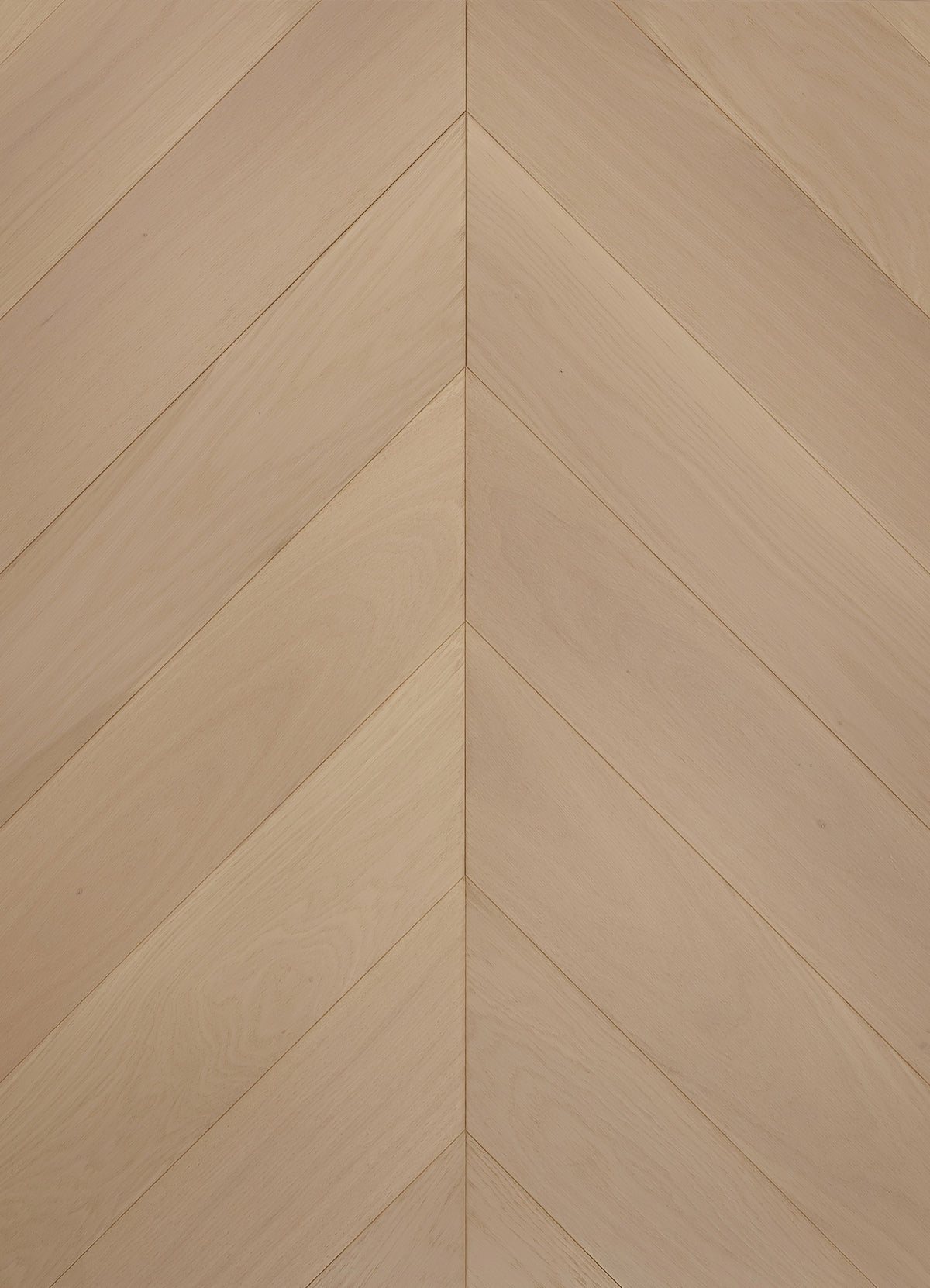
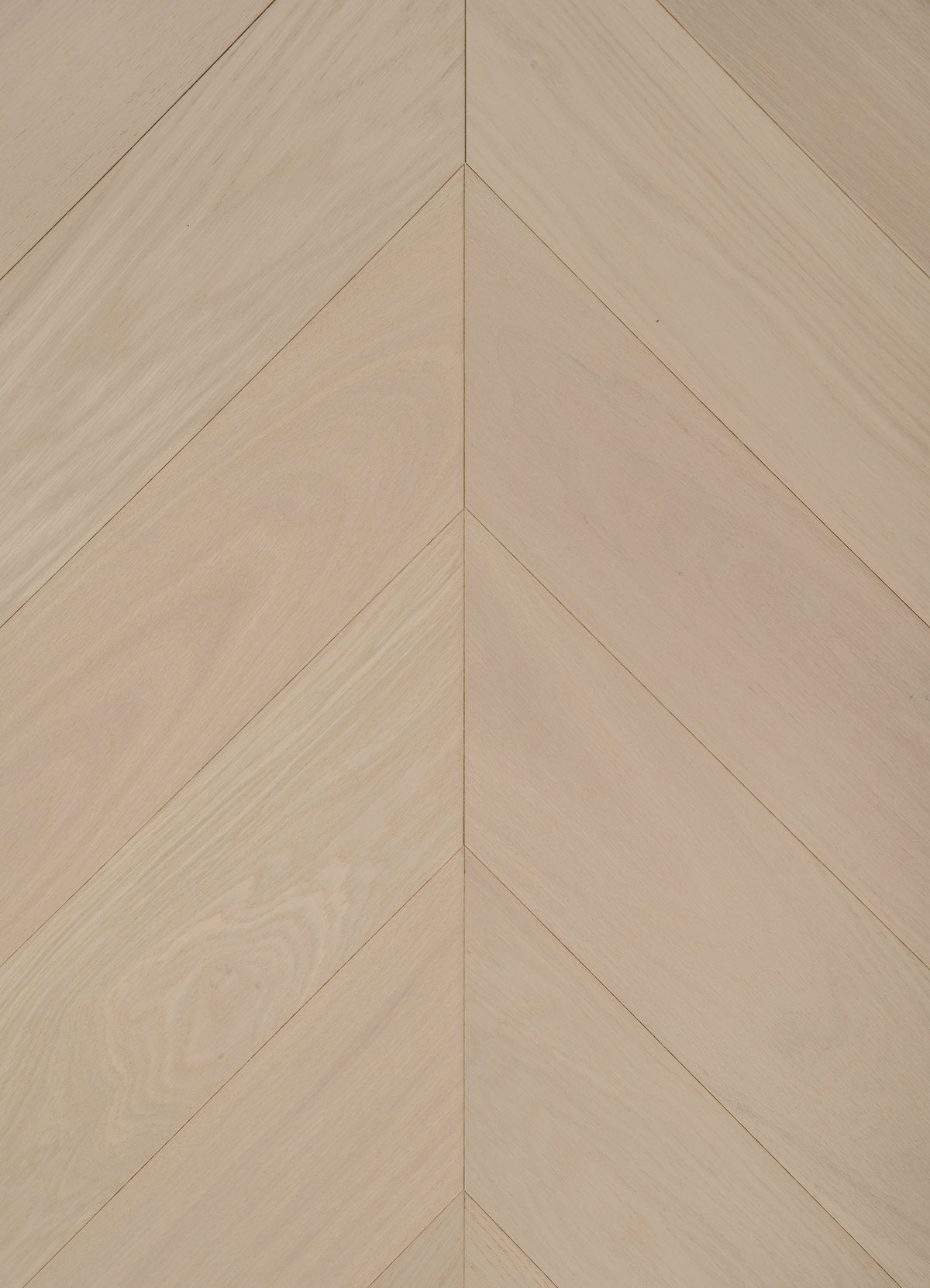
Angled oak boards meet in a continuous V, giving chevron flooring a clear sense of direction. In the FORMA Collection, that repeated line sits alongside the natural movement of European oak, with wire-brushed grain and a matte finish. Compare pale, sun-washed, golden and smoked-brown tones to shape the balance of pattern and warmth in your space.
FORMA / CHEVRON
Start with the layout.
Look through the colors shown here, then open a floor to review its details.
COLORS
Explore chevron.



INSTALLATION
Plan for glue down.
Herringbone and chevron install glue down only. Read the installation guidance before planning the work.
A continuous V-shaped pattern
Chevron boards have angled ends that meet to form repeated V shapes. The aligned points create a visible spine through the pattern, while the grain changes direction on either side. This gives the floor an ordered geometry with variation within each piece of oak.
Consider that direction early in the room plan. View the floor from the main entrance and think about its relationship to a fireplace, an island or a long run of windows. In connected rooms, review the transitions as part of the same composition. A layout drawing can help you assess these relationships before the boards are installed.
Color within the pattern
NATURAL Chevron brings light beige oak to a pale material palette. SAND Chevron offers a more muted beige and taupe direction, while DUNE Chevron has a dry, sun-washed blonde-beige character. AMBER Chevron adds golden warmth. ESPRESSO Chevron gives the geometry a deeper smoked-brown foundation with charcoal influence.
For a soft contemporary interior, consider lighter oak with plaster-colored walls, linen and stone. A warmer tone can connect almond cabinetry and aged brass. Darker oak can sit beside warm white walls, bronze and textured upholstery. Review the scale of any stone veining or patterned textiles alongside the chevron joints, so each material has the presence you want.
European oak, wire-brushed and matte
FORMA chevron flooring combines a 4 mm European oak wear layer with an engineered eucalyptus plywood core. It is offered in Classic (ABC) grade with nominal 5-inch boards. Wire brushing emphasizes the grain, and matte UV lacquer gives the surface a low-sheen finish. The natural variation of the oak remains part of the design within the repeated pattern. The FORMA technical data sheet lists every size, grade and installation method.
Chevron or herringbone?
Chevron's angled board ends meet in a continuous V. Herringbone uses rectangular boards with offset joints, creating an interlocking zigzag. Both bring pattern to European oak. Compare their joint lines and grain direction at a similar image scale, alongside the herringbone wood flooring in the same colors, to decide which rhythm belongs in your room.
Compare the color with your materials
Use the chevron images to review the layout, then place a physical sample beside your cabinet finish, countertop, wall paint and fabrics. View the group in daylight and under the lighting you will use in the evening. Natural wood and screen images vary, so the physical comparison is an important part of choosing the tone. Request FORMA flooring samples in 10 colors, or see all engineered European oak flooring in the FORMA Collection.
Chevron flooring questions
What is the difference between chevron and herringbone flooring?
Chevron uses angled board ends that meet in a continuous V. Herringbone uses rectangular boards laid in a staggered, interlocking pattern.
What grade is FORMA chevron flooring?
The current chevron products are offered in Classic (ABC) grade. Review the individual product page for its specifications and images.
How is FORMA chevron flooring installed?
FORMA chevron is specified for glue-down installation. Review the product data sheet and the installation guide, and plan the pattern direction, alignment and transitions with your flooring installer before work begins.
NEXT STEP
Look at the floor in your room.
Choose samples and keep the rest of the project in view.